In this post we’ll show you how to link a promotion or a lead magnet to promote your assessment, and vice versa. That way you can amplify the effect of your client engagement efforts and boost engagement.
You can add a promotion to both the landing page and results page of an assessment. You can also choose different ways to display a promotion, including a page section, a top notification bar with a count-down timer, or a popup.
Here’s an example of how a promotion will look like on the start page of your assessment (take the assessment to see how it appears on the results page).
The term “lead magnet” comes from sales and marketing. It is essentially something that the clients find valuable enough that they are willing to exchange their contact details with you, or take an action, such as taking an assessment.
Your lead magnet could be a:
While your Evalinator assessment or quiz is also an excellent lead magnet by itself, adding a separate lead magnet (or offer or download) to your assessment does 2 things:
Your assessment provides immediate value to the visitors coming to your website and appeals to the inquisitive side of of people’s emotions. It positions your expertise well and builds trust.
A promotion simply enhances the appeal for your clients or prospects.
When you edit your Evalinator assessment, you’ll see a tab called “Promotions” under settings. From here you’ll be able to link your lead magnet and promote your assessment too.
The previews show how the promotion will look on the landing and results pages of your Evalinator assessment. The customizable redeem button points to the online location where you have your checklist or course.
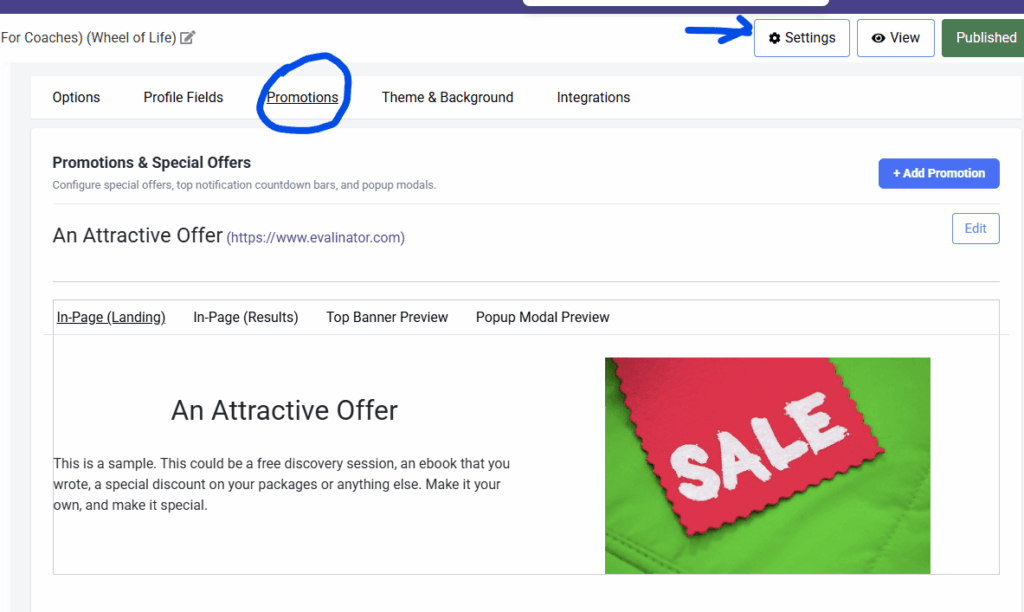
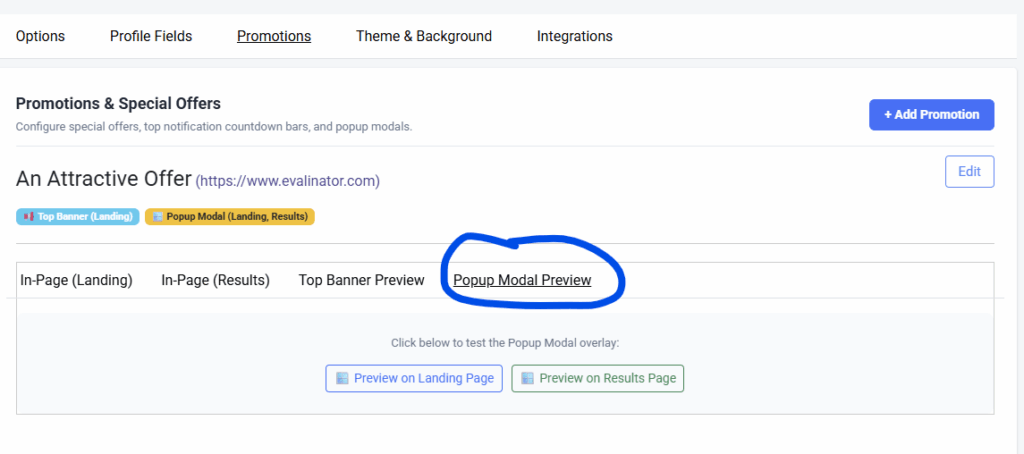
When you click “Edit” on your assessment or quiz, you will be brought to the screen where you can set up your incentive.
The landing page and results page don’t necessarily need to use the same wording. The landing page can introduce an offer before someone starts the assessment, while the results page can use the completed assessment as the context for a next step.
For example:
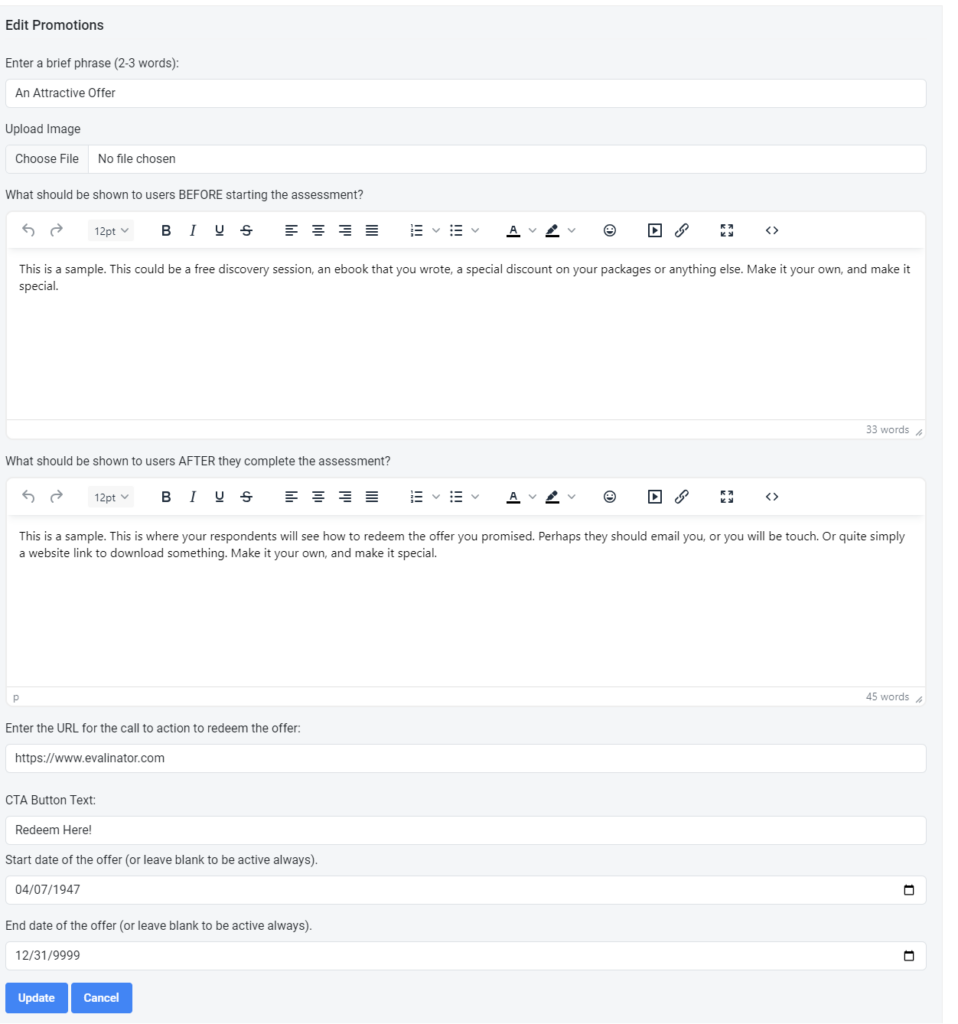
A promotion has 7 basic components.
Once you have set up the promotion, there’s just one more thing to do. Go to the options in your Start Page tab, add a promotion component, and select the promotion to display. Position it wherever you need to!
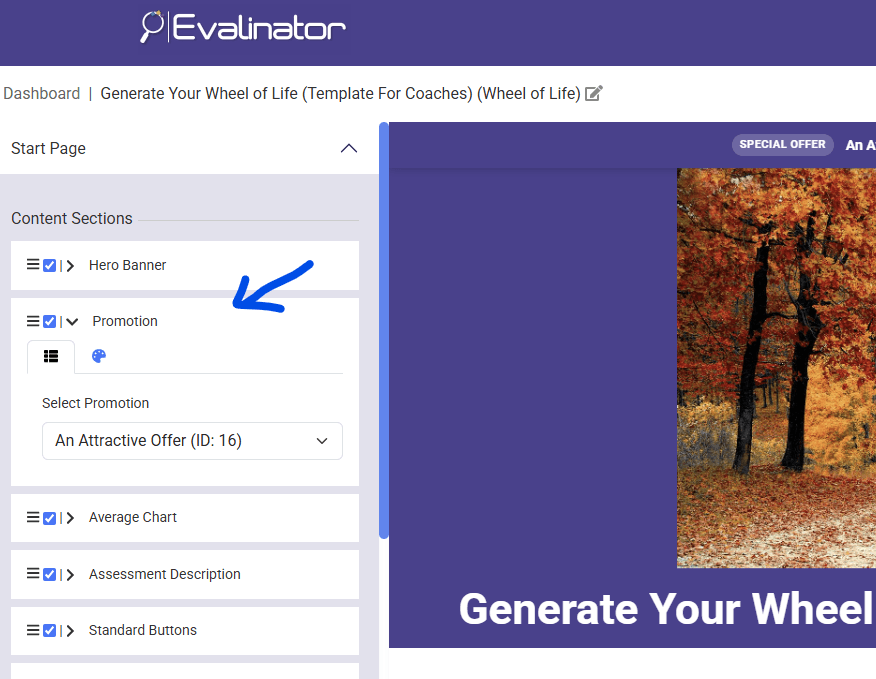
And here’s how it appears where you position it.
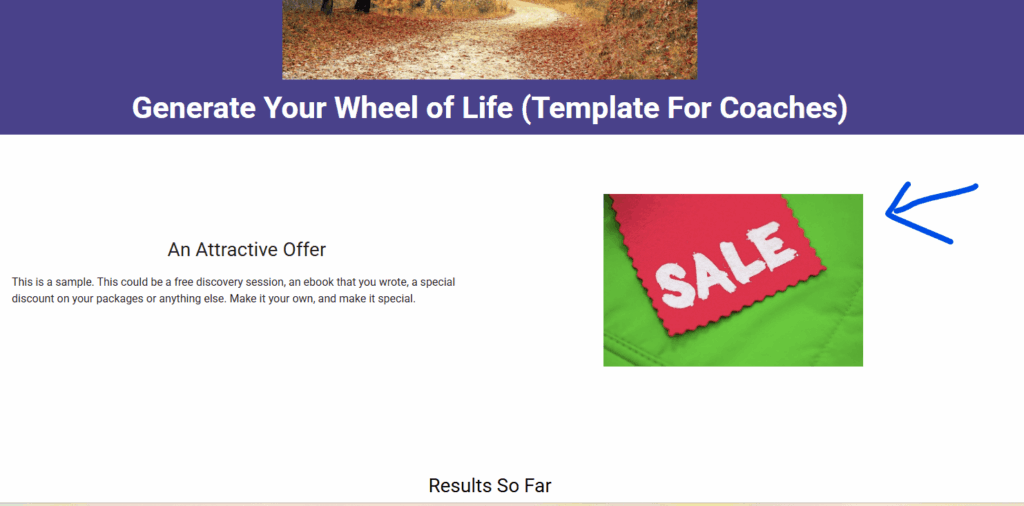
A promotion doesn’t have to appear only as a section on the page.
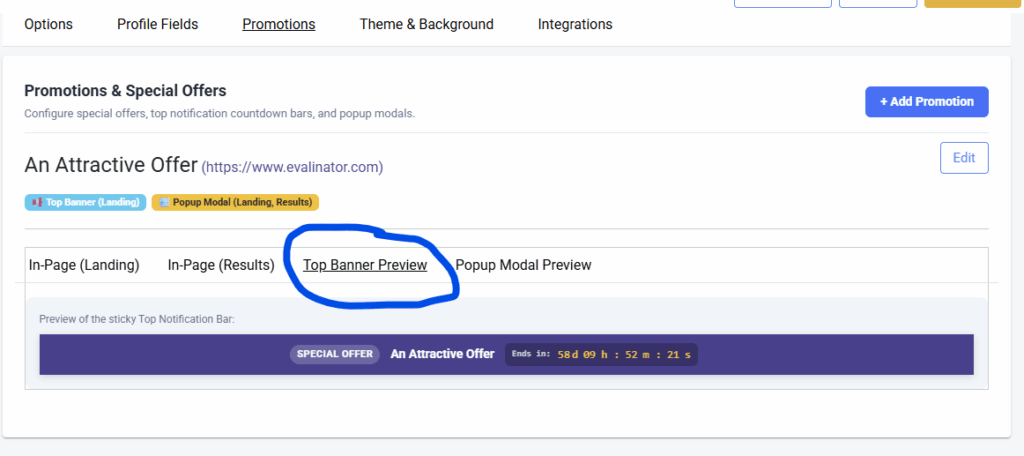
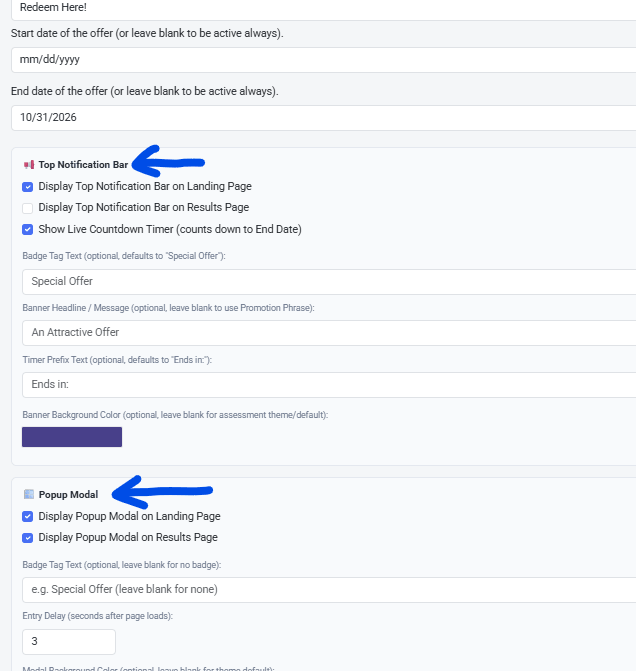
You can also choose to display it as a top notification bar.
These options are available on both the landing page and results page, giving you more flexibility in how prominently you want to present an offer.
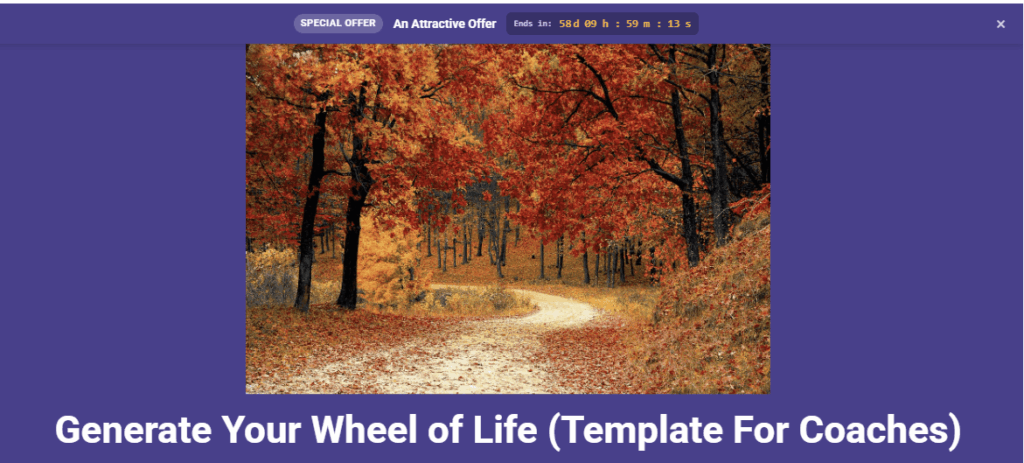
The top notification bar appears at the top of the assessment. It can be useful when you want to make an offer visible without taking over the page.
You can customize the notification text and its colors to fit your assessment.
If your promotion has an expiration date, you can also display a countdown timer in the notification bar on the landing page.
For example:
Free leadership workshop — registration closes in 2 days, 6 hours
The countdown uses the promotion’s expiry date, so you don’t need to maintain a separate timer.
A countdown can be useful when there is a genuine deadline, such as the end of registration, a scheduled event, or the expiration of a special offer. It shouldn’t be used simply to create an artificial deadline.
Research on countdown timers is positive if there is trust already, which is one reason it is better to treat them as something to test rather than assuming they will automatically improve conversion.
You can also display a promotion as a popup modal after a specified number of seconds.
For example, you might allow someone to begin reading the assessment and then display:
Want a few practical tips to improve your score?
after five seconds.
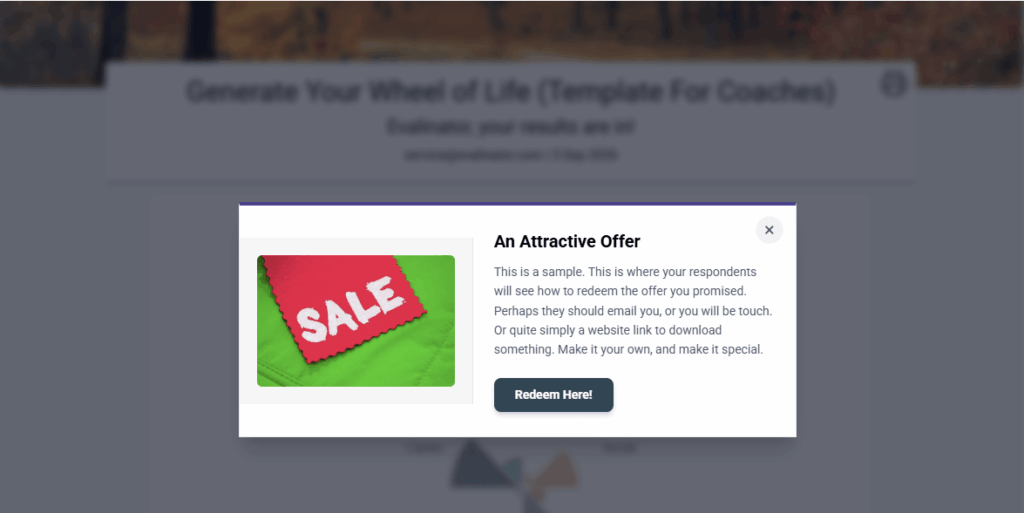
The approach can also be used on the results page.
For example, after someone has had a chance to see their results, a popup could invite them to download a related resource or schedule a consultation.
The popup’s background color can be customized, allowing you to make it fit the content of the promotion.
Because the popup can contain rich text, you can also format the message and emphasize particular words or phrases.
There isn’t one presentation that will work best for every assessment.
A simple page section may be appropriate when the offer is an important part of the assessment itself.
A notification bar is useful when you want the offer to remain visible without interrupting the assessment.
A popup can be useful when you want to bring attention to an offer after someone has had a chance to engage with the page.
You can experiment with different approaches depending on your audience and the type of offer.
For context, conversion rates vary considerably across websites and industries. Unbounce’s analysis of more than 41,000 landing pages and 464 million visitors found a median landing-page conversion rate of 6.6% across industries. They also emphasize that this is a benchmark rather than a target, since conversion varies substantially by industry, traffic source, and the action being measured.
That is also why it is difficult to say that a popup, banner, or countdown will produce a particular improvement. What works depends on the offer, the audience, and when the promotion is presented.
The most useful promotions are usually connected to what the person is doing.
For example, a career coach might offer a career-planning worksheet after a career assessment. A consultant might offer a checklist related to the assessment topic. A coach might invite someone to schedule a conversation after reviewing their results.
The assessment provides the initial interaction. The promotion provides an optional next step.
You can use the different display options to find an approach that fits naturally with your assessment rather than showing the same offer in the same way every time.
And as your assessments become more sophisticated, promotions can also become more specific to the results someone receives. That’s something we can explore further as the promotion capabilities evolve.
Getting Started
Create your offer, add the relevant text and link, choose when the promotion should be active, and then decide where and how you want it displayed.
You can start with a simple promotion section and add a notification bar or popup when you want to experiment with a different presentation.
That’s it. Click “Publish” and you are all set to promote your assessment!
If you have any questions, just let us know. We’ll add more variations and options to this feature so stay tuned.
Whether it’s a Wheel of Life, or a Scored Assessment, a promotion works in all cases to promote your assessment. And of course it works for most audiences too. Here’s an example of how it will look like. on the start page (take the assessment to see how it appears on the results page).
After all, who doesn’t want something of value from an expert? (hint: that’s you!).
Enjoy!
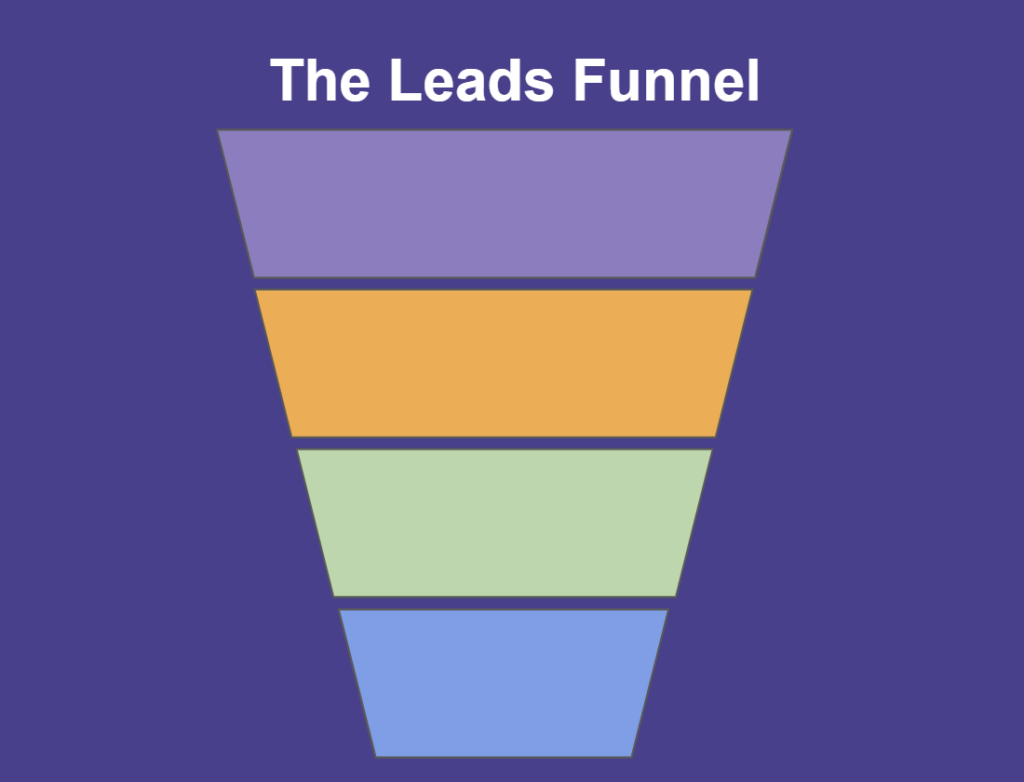
PS: If you want to create a lead generation funnel for your business or increase the life-time value of your relationships, then see our plans and sign up for a 14 day free trial.
Feeling frustrated with lead generation?
Take this free, 5-minute quiz and get more prospects into your leads funnel.
Instant Results. Actionable recommendations. Email required.
Find Your Score >>